
7 Warning Signs of a Scam (That Show Up Again and Again)

Updated: Apr 5
Scams come in many forms. Emails, phone calls, text messages, fake websites, social media messages, and even in-person encounters. While the details change, the underlying tactics are remarkably consistent.
Cybercriminals often rely more on psychology than technology. They try to create urgency, fear, trust, or curiosity so you feel compelled to act quickly before thinking things through. When you know these patterns, scams become much easier to recognize and respond to.
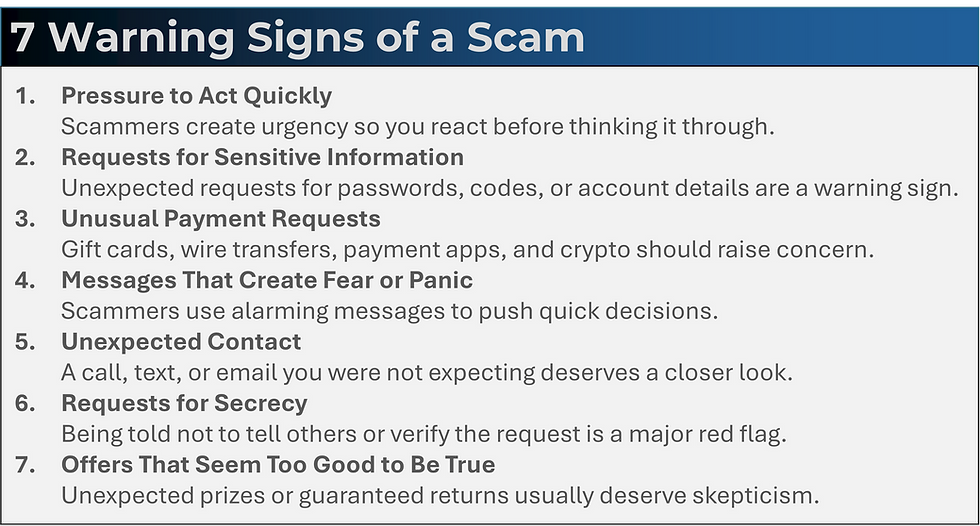
Below are seven warning signs that appear again and again across many types of scams.
Pressure to Act Quickly
Scammers often create urgency so you don’t have time to evaluate the situation carefully. The goal is to trigger a fast reaction before questions are asked.
You might notice messages like:
“Immediate action required.”
“Your account will be suspended today.”
“Failure to respond may result in penalties.”
“Limited-time offer - act now.”
Urgency is one of the most common tactics because it pushes people to react quickly instead of thinking things through.
What you can do: Don’t respond right away. Pause and take whatever time you need to think about what you’re being asked to do. That alone can help you spot a scam. Legitimate organizations rarely require immediate action without allowing time for verification.
Requests for Sensitive Information
Unexpected requests for confidential information should always raise concern. Scammers often pose as trusted organizations to collect information they can later use for fraud or identity theft.
Examples of sensitive information include:
Usernames and passwords
Verification codes (one-time passcodes)
Answers to security questions (such as mother’s maiden name)
Social Security numbers
Bank account or credit card numbers
Copies of identification
Date of birth
Home address
Legitimate organizations don’t typically request sensitive information through unsolicited email, text messages, or phone calls.
What you can do: If you receive an unexpected request, contact the organization directly using a trusted phone number or website. Don’t use the contact information provided in the message.
Unusual Payment Requests
Many scams involve payment methods that are difficult or impossible to trace or recover. Scammers often insist that you pay using one of the following:
Gift cards
Prepaid debit cards
Wire transfers
Payment apps (Zelle, Venmo, PayPal)
Cryptocurrency (such as Bitcoin)
A request for one of these payment methods, especially under pressure, is a strong warning sign.
What you can do: Pause and question the request. Be cautious if someone insists on a specific or unusual payment method. Legitimate businesses typically offer standard payment options that provide consumer protections.
Messages That Create Fear or Panic
Scammers often attempt to create anxiety in order to influence decision-making. Fear can override careful thinking and cause people to act quickly.
Examples include messages like:
“Your account has been compromised”
“Legal action is being taken against you”
“A delivery problem requires urgent action”
“Your computer has a virus”
“Your benefits will be suspended”
“A family member needs immediate help”
Emotional reactions can make even cautious people respond too quickly.
What you can do: Don’t respond right away. Pause and take whatever time you need to question both the message and what you’re being asked to do. Treat alarming messages with caution. Take time to verify the situation before you respond in any way.
Unexpected Contact
Scams often begin with unsolicited communication. If you receive a message or call that you were not expecting, it’s worth taking a closer look.
Examples include:
Text about a package you didn’t order
Text from an unknown number asking how you’re doing
Call claiming to be from your bank
Email about a prize you never entered to win
Message from someone claiming to be technical support
Request from a vendor you don’t recognize
Unexpected contact doesn't always indicate fraud, but it should increase your level of awareness.
What you can do: Don’t respond right away. Verify the request independently before taking any action. Use only official websites or known contact information.
Requests for Secrecy
Scammers sometimes try to isolate their targets by discouraging them from speaking with others. This tactic reduces the chance that someone else will recognize the warning signs.
Examples include:
“Do not tell anyone about this."
“Your account is under investigation.”
“This matter is confidential.”
“Discussing this could cause problems.”
Requests for secrecy are often intended to prevent verification.
What you can do: Be cautious if someone pressures you not to consult others. That is often a strong warning sign. Legitimate organizations rarely require secrecy for routine matters.
Offers That Seem Too Good to Be True
Unexpected prizes, guaranteed returns, or unusually attractive offers are often used to gain attention and build trust.
Examples include:
Winning a lottery or contest you did not enter
Investment opportunities promising guaranteed profits
Heavily discounted products from unfamiliar websites
Offers promising quick income with little effort
If an offer sounds unrealistic, it deserves a closer look.
What you can do: Take time to research unfamiliar offers and organizations. A quick search can often reveal whether others have reported similar experiences or scams.
Why These Warning Signs Matter
Scams continue to evolve, especially with the help of AI tools, but the underlying tactics remain consistent. Recognizing common patterns can help you make informed decisions without feeling pressured.
You don’t need to memorize every possible scam scenario. Instead, focus on recognizing the behavioral warning signs that appear repeatedly across different situations.
One of the most effective habits is pausing before you respond. Awareness and a willingness to pause are often enough to prevent problems before they happen.
Final Thought
Scammers succeed when people feel rushed, uncertain, or distracted. Recognizing these warning signs helps you respond calmly and confidently.
Taking a moment to verify a request can prevent financial loss or identity theft. When something doesn’t feel right, slowing down and taking a closer look is always a smart decision.
